

The Escalation That Reaches the Right Level
CPO Path #23 CW 35 2026
EXECUTIVE PREMISE
Acute disruption compresses organisational judgment. Procurement becomes visible through decision speed, authority clarity and escalation quality.
The harder question comes afterwards: whether temporary crisis visibility becomes standing mandate or disappears with the emergency.
WHY THIS MATTERS
The 2000 Philips semiconductor fire offers a clear comparison. Nokia escalated the warning, placed affected components on special monitoring, increased contact with Philips from weekly to daily or more often, and assembled a cross-functional team within hours once the scale became clear. Ericsson initially received the notification through “one technician talking to another”; senior mobile-phone leadership learned the seriousness later, and Philips subsequently said it could not meet Ericsson’s requirements on time. ([The Wall Street Journal], 2001)
The distinction is not simply speed. It is whether a technical signal reaches executive decision-makers.
THE REAL DYNAMIC
Nokia’s CEO joined discussions with Philips’ CEO while the operational team secured additional supply, pushed Philips to reallocate capacity, and redesigned some chips for production elsewhere. ([The Wall Street Journal], 2001)
McKinsey’s supply-chain nerve-centre design makes the governance principle explicit: clear owners, defined decision authority, an operating cadence, a situation report showing immediate decisions required, trigger-based actions, and a disruption monitor serving as a single source of truth. ([McKinsey & Company], 2022)
A useful distinction is between centralised decision rights and centralised problem solving. After the 1997 Aisin fire, firms inside and outside Toyota’s supplier network self-organised alternative production of a sole-sourced brake component; Toyota-group assembly restarted after two days, with limited direct control from Toyota. ([MIT Sloan Management Review], 1998)
One practical reading is that enterprise-level trade-offs should escalate without forcing every technical action through the same bottleneck. The Nokia and Aisin cases support that distinction without suggesting one model fits every organisation. ([The Wall Street Journal], 2001; [MIT Sloan Management Review], 1998)
The second test begins when the crisis ends. Ericsson subsequently implemented a new supply-chain-risk organisation, processes, tools and formal supplier requirements. ([Norrman & Jansson], 2004) After the 2011 disaster in Japan, Toyota’s business-continuity plan required suppliers to hold two to six months of semiconductor inventory depending on lead time; Reuters reported in 2021 that the policy helped Toyota remain largely unscathed by the chip shortage at that point. ([Reuters], 2021)
Yet attention does not automatically persist. In McKinsey’s 2024 survey of 88 senior supply-chain leaders, regular senior-management reporting of supply-chain risk fell from almost half of respondents in 2023 to one quarter in 2024; 30% said their boards had a deep understanding of supply-chain risk. ([McKinsey & Company], 2024)
A practical reading is that crisis visibility is perishable unless unresolved decisions, risk ownership and reporting cadence move into standing governance. ([Norrman & Jansson], 2004; [McKinsey & Company], 2024)
The full conversation
Almost two hours with Panos Anastasiou, CPO of Opella. Uncut, including the parts most executives leave out - for you {{first_name}} !
Watch and follow on YouTube for future interviews:
Apple Podcast:

THE CPO INTERVIEWS
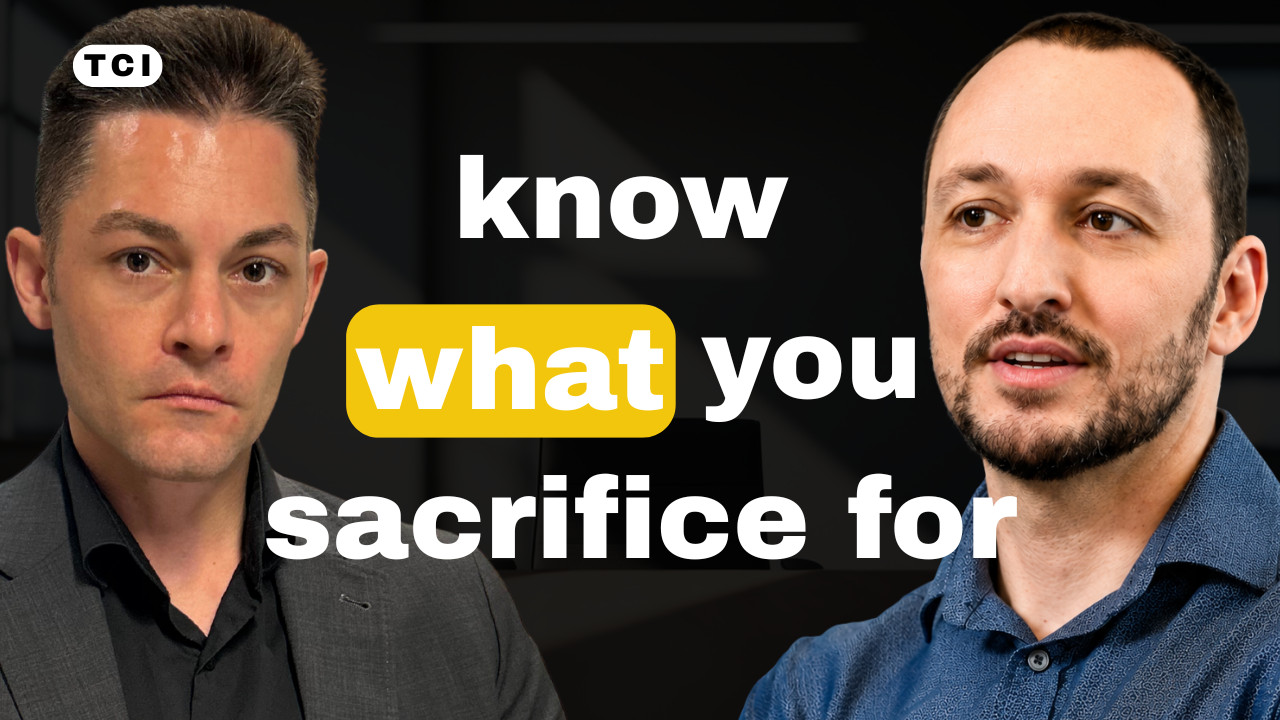
How a CPO Runs €3 Billion with 111 People | Panagiotis Anastasiou
Follow on Spotify:
WHAT STRONG LEADERS DO DIFFERENTLY
A two-page disruption protocol can make that transfer explicit.
Page one: define triggers; name one decision-holder for shipment stops, premium freight, emergency spend, alternate sourcing, inventory allocation and engineering deviations; attach spending authority; map the escalation ladder; identify who initiates executive-to-executive supplier contact.
Page two: define one daily situation report covering changed assumptions, decisions required today and the next trigger; set the temporary structure’s end date; name the standing forum inheriting open items; assign one owner to every unresolved risk.
The value is not the document. It is removing the interval in which everyone knows something serious is happening, but nobody is certain who may decide.
CPO PATH DIAGNOSTIC - Check your org
Question | Fully true | Partly true | Not true |
|---|---|---|---|
We know exactly what activates disruption governance. | ☐ | ☐ | ☐ |
Each major decision has one named holder and spending limit. | ☐ | ☐ | ☐ |
Executive-to-executive escalation has a named initiator. | ☐ | ☐ | ☐ |
The crisis team works from one decision-oriented daily report. | ☐ | ☐ | ☐ |
Every disruption has a defined transfer into standing governance. | ☐ | ☐ | ☐ |
ONE-LINE VERDICT
The escalation people remember is the one that made authority, trade-offs and the next decision legible before time removed the options.
Hi {{first_name}}, Did this episode add value to you?
I read every single message, and past posts already shaped this space. Reach out to me and tell me what you’re up to and the path you’ve chosen or post online your thoughts about this episode. I read every email and linked post.
Talk soon,
Pascal

Did this resonate with you?
Tools I use to improve efficiency and ensure stable processes:
Who should sit in the next chair?
Episode 1 of The CPO Interviews was Panagiotis “Panos” Anastasiou, CPO of Opella. Episode 2 is open.
Which CPO would you want to hear for two hours, uncut? Your own? Someone whose thinking you have followed from a distance? Name them — and if you can make the introduction, better still.
Replies to this email, or write to [email protected].
I support your high-stakes project - free Interim Management resources
I step in when a procurement function has a gap that cannot wait for a permanent hire: a vacant lead role, a tender that has to reach award, a supplier situation that needs someone full-time, or a new site or project with no sourcing structure yet.
8+ years across direct, indirect and CapEx (USA, Asia, EMEA).
Capacity from September 2026 or at short notice, if the situation cannot wait. Part-time or full-time.
Reply to this email, or write to [email protected].
SOURCES
Latour, A. (2001). “Trial by Fire: A Blaze in Albuquerque Sets Off Major Crisis for Cell-Phone Giants.” The Wall Street Journal, January 29, 2001.
https://web.mit.edu/course/15/15.795/WSJ_Nokia%20HandlesSupplyChainShock.pdf
Nishiguchi, T., & Beaudet, A. (1998). “The Toyota Group and the Aisin Fire.” MIT Sloan Management Review, 40(1), 49–59.
https://shop.sloanreview.mit.edu/store/the-toyota-group-and-the-aisin-fire
Norrman, A., & Jansson, U. (2004). “Ericsson’s proactive supply chain risk management approach after a serious sub-supplier accident.” International Journal of Physical Distribution & Logistics Management, 34(5), 434–456.
https://doi.org/10.1108/09600030410545463
McKinsey & Company. (2022). “Supply chains: To build resilience, manage proactively.”
https://www.mckinsey.com/capabilities/operations/our-insights/supply-chains-to-build-resilience-manage-proactively
Shirouzu, N. (2021). “How Toyota thrives when the chips are down.” Reuters, March 9, 2021.
https://www.reuters.com/business/autos-transportation/how-toyota-thrives-when-chips-are-down-2021-03-09/
McKinsey & Company. (2024). “Supply chains: Still vulnerable.”
https://www.mckinsey.com/capabilities/operations/our-insights/supply-chain-risk-survey-2024
Thank you for your time and trust,
Pascal Hecker | Editor-In-Chief, CPO Path.